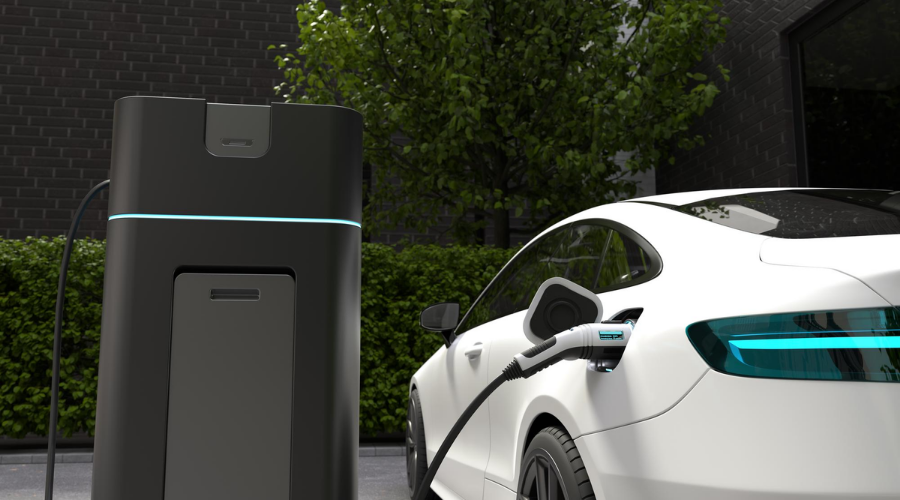
The electric vehicle battery market is the backbone of global vehicle electrification, supplying the energy-storage systems that power passenger cars, commercial vehicles, two-wheelers, and hybrid vehicles. Its growth is being driven by rising EV adoption, falling battery costs, advances in cell chemistry, charging improvements, and expanding battery manufacturing capacity.
The global electric vehicle battery market reached USD 76.72 billion in 2025 and is projected to expand at a CAGR of 19.20% from 2026 to 2035, reaching approximately USD 444.29 billion by 2035. This trajectory reflects the increasingly important role of batteries in vehicle cost, driving range, safety, charging performance, and overall vehicle design.
Battery demand is already expanding at an industrial scale. The International Energy Agency (IEA) reports that global demand for EV batteries exceeded 950 GWh in 2024, rising by more than 25% from 2023. Electric cars accounted for more than 85% of EV battery demand, while electric truck battery demand increased by more than 75%, highlighting the growing importance of commercial electrification.
The battery is also becoming a strategic component of the automotive value chain. Automakers increasingly view battery sourcing, chemistry, manufacturing location, software integration, and recycling as competitive factors rather than simply procurement decisions. This is encouraging partnerships between automakers and battery manufacturers while accelerating investment in localized supply chains.
Battery Technologies and Chemistry Trends
Lithium-ion technology dominates the electric vehicle battery market because it combines high energy density, relatively long cycle life, mature manufacturing, and improving cost economics. Within lithium-ion batteries, lithium iron phosphate and nickel-based chemistries are increasingly competing according to vehicle range, cost, safety, and performance requirements.
Lithium-ion batteries represent the principal technology across modern EVs. However, “lithium-ion” is a broad category rather than one single chemistry. Lithium iron phosphate (LFP) batteries emphasize cost, durability, and thermal stability, while nickel-manganese-cobalt (NMC) and related nickel-based chemistries generally provide higher energy density where vehicle range and packaging efficiency are priorities.
The chemistry shift toward LFP has been particularly significant. According to the IEA, LFP batteries accounted for almost half of the global electric car battery market in 2024, compared with less than 10% in 2020. Their growing adoption has been supported by improved performance and lower costs.
LFP also illustrates why battery competition cannot be judged solely by energy density. The IEA estimates that LFP battery packs were almost 30% cheaper per kWh than NMC packs in 2024, although LFP has lower gravimetric and volumetric energy density. For vehicles where affordability, durability, and safety are more important than maximum range, that trade-off can be commercially attractive.
Lead-acid batteries continue to have a role in certain auxiliary and low-cost applications, although they are not generally competitive with lithium-ion for the main propulsion battery in modern long-range EVs. Nickel-metal-hydride batteries remain relevant particularly in established hybrid-electric vehicle architectures, where their durability and proven operating characteristics continue to provide value.
Emerging technologies are also attracting investment. Sodium-ion batteries could reduce exposure to lithium supply constraints, while lithium-sulphur and solid-state technologies aim to improve energy density or reduce dependence on conventional materials. These technologies remain at different stages of commercialization, so near-term market growth is still expected to be dominated by established lithium-ion platforms.
Advances in Battery Design and Vehicle Integration
Battery innovation is increasingly focused on the entire pack rather than only the chemistry. Cell-to-pack integration, improved thermal management, structural battery designs, advanced battery-management systems, and higher-voltage electrical architectures can increase usable energy while reducing weight and manufacturing complexity.
BYD’s Blade Battery is a useful commercial example. The company uses LFP chemistry in a long, thin cell design intended to improve packaging efficiency and structural strength. BYD states that the Blade Battery’s design allows more energy to be installed within available vehicle space while emphasizing safety and durability.
Panasonic Energy, meanwhile, continues to develop cylindrical lithium-ion formats including 2170 and 4680 cells for automotive applications. Such developments demonstrate that battery performance depends not only on chemistry but also on cell format, manufacturing precision, cooling, electrical architecture, and integration with the vehicle platform.
Applications Across Passenger Cars, Commercial Vehicles, and Two-Wheelers
Passenger cars remain the largest source of EV battery demand, but commercial vehicles, buses, trucks, two-wheelers, and hybrid vehicles are creating additional growth opportunities. Battery requirements vary significantly between these segments because range, payload, charging frequency, vehicle utilization, and cost have different priorities.
Passenger EVs typically require batteries optimized for a balance between range, acceleration, fast charging, safety, and affordability. A larger battery can increase range, but it also adds weight and cost. Manufacturers therefore increasingly focus on improving vehicle efficiency alongside increasing battery capacity.
Commercial vehicles create a different opportunity. Electric delivery vans and trucks can benefit from predictable routes, centralized charging, and high daily utilization. Although their battery packs are larger and require significant upfront investment, lower operating and maintenance costs can improve the economics of fleet electrification.
The IEA expects electric trucks to account for more than 8% of global EV battery demand by 2030 under its Stated Policies Scenario, compared with nearly 3% in 2024. This suggests that battery suppliers will increasingly need to develop products optimized for high-cycle commercial operation, rapid charging, durability, and heavy-duty thermal management.
Two-wheelers are particularly important in emerging markets. Their smaller batteries reduce vehicle cost and charging requirements, making electrification accessible in markets where passenger EVs remain relatively expensive. At the same time, smaller packs can have higher costs per kWh because fixed components such as battery-management systems and packaging contribute more to total cost.
Plug-in hybrid electric vehicles (PHEVs) and hybrid electric vehicles (HEVs) require another set of battery characteristics. PHEVs generally need enough energy capacity for meaningful electric driving while retaining an internal-combustion engine for longer journeys. HEVs use smaller batteries and emphasize power delivery, frequent charge-discharge cycling, and integration with the combustion drivetrain.
Beyond road transportation, battery technologies are increasingly relevant to industrial mobility, logistics equipment, marine applications, and stationary energy storage. This broader ecosystem creates opportunities for battery manufacturers to spread research, manufacturing, and recycling capabilities across multiple applications.
Regional Battery Manufacturing and Market Dynamics
Asia Pacific is the center of the global EV battery industry, with China holding a particularly strong position across battery manufacturing, components, processing, and EV production. North America and Europe are expanding domestic capacity, while emerging markets in Southeast Asia, India, and Latin America are becoming increasingly important sources of demand.
China’s advantage is substantial. The IEA estimates that China accounted for nearly 80% of global EV battery cell production in 2024, while Chinese companies also represented almost 85% of cathode active material production and more than 90% of anode active material production.
The country’s position is supported by a deeply integrated supply chain, high production volumes, extensive battery manufacturing expertise, and intense domestic competition. In 2024, battery-pack prices in China declined by nearly 30%, compared with declines of roughly 10–15% in Europe and the United States. The resulting cost advantage is influencing both EV prices and international battery sourcing.
Europe is pursuing greater supply-chain independence through local battery plants, regulatory requirements, and investment in circularity. The European Union’s Batteries Regulation takes a full life-cycle approach covering sourcing, manufacturing, use, collection, reuse, and recycling. It also introduces progressively stronger requirements relating to carbon footprint, recycled materials, and material recovery.
North America is similarly focused on domestic production. The IEA reports that U.S. battery manufacturing capacity increased by almost 50% in 2024, with Korean companies accounting for nearly 70% of that growth, supported by incentives for local manufacturing.
India and other emerging economies are also gaining importance. The IEA notes that EV battery demand outside China in emerging and developing economies nearly doubled its share between 2022 and 2024, supported by growth in Southeast Asia, India, and Brazil.
Battery Cost Trends and the Shift Toward Faster Charging
Battery prices are falling as manufacturing scales, raw-material markets stabilize, production efficiency improves, and competition intensifies. Lower battery costs can directly improve EV affordability, but manufacturers must also manage mineral-price volatility, capital expenditure, supply-chain concentration, and increasingly demanding performance requirements.
The IEA reports that global lithium-ion battery-pack prices declined by 20% in 2024, the largest annual reduction since 2017. Lower critical-mineral prices and intense competition, particularly in China, were major contributors.
This trend is commercially important because the battery remains one of the most expensive components of an EV. However, cheaper batteries do not automatically translate into equally large reductions in vehicle prices. Automakers also have to absorb costs related to motors, power electronics, software, safety systems, manufacturing, distribution, and charging infrastructure.
Battery cost competitiveness is therefore increasingly linked to manufacturing scale. Large producers can spread research, equipment, quality-control, and procurement costs across enormous production volumes. Vertical integration can provide another advantage by giving manufacturers greater control over materials, cells, modules, packs, and vehicle integration.
The industry is also moving toward faster charging. High-power charging can reduce the practical inconvenience of EV ownership, particularly for commercial fleets. However, faster charging increases thermal-management demands and can accelerate degradation if the battery is not engineered appropriately.
Supply Chain, Safety, and Recycling Challenges
Supply-chain concentration, critical-mineral volatility, safety requirements, recycling limitations, manufacturing overcapacity, and geopolitical trade restrictions remain major challenges. The industry must expand rapidly without creating new vulnerabilities in materials, production, logistics, or end-of-life management.
Lithium, nickel, cobalt, graphite, manganese, copper, and other materials connect battery manufacturers to mining and refining industries around the world. A disruption in one part of the supply chain can affect battery costs and vehicle production much more broadly because processing capacity is geographically concentrated.
Battery manufacturing capacity has also grown faster than demand in some regions. Global battery-cell manufacturing capacity exceeded 3 TWh in 2024, around three times combined EV and battery-storage demand that year. About 85% of global manufacturing capacity was located in China.
Safety remains another critical issue. Lithium-ion batteries can experience thermal runaway when damaged, improperly manufactured, overheated, or otherwise subjected to abnormal conditions. Manufacturers therefore invest heavily in cell chemistry, separators, thermal-management systems, sensors, battery-management software, crash protection, and validation testing.
Recycling is becoming strategically important but is not yet a complete substitute for primary mineral supply. The IEA estimates that EV battery recycling will become increasingly important as larger numbers of batteries reach the end of their useful lives, but the current contribution to critical-mineral demand remains limited because most EV batteries are still relatively young.
The European Union’s regulatory approach illustrates where the industry is heading. Requirements concerning carbon footprints, recycled content, documentation, and material recovery are designed to make batteries more traceable and circular over their entire life cycle.
Competitive Landscape and Leading EV Battery Companies
The competitive landscape includes major Chinese, Japanese, and South Korean battery manufacturers, as well as vertically integrated EV companies. Competition increasingly centers on cell chemistry, production scale, charging capability, safety, energy density, manufacturing location, and relationships with automakers.
Contemporary Amperex Technology Co., Limited (CATL) is one of the industry’s most influential battery manufacturers, with products spanning passenger and commercial vehicles. Its portfolio includes LFP-based Shenxing technology and Qilin batteries, while its recent product development emphasizes charging speed, safety, and energy density.
BYD Company Ltd. combines battery manufacturing with vehicle production, giving it unusual control over battery-to-vehicle integration. Its Blade Battery demonstrates how LFP chemistry can be paired with a distinctive structural and packaging approach.
Panasonic Corporation has longstanding expertise in cylindrical automotive lithium-ion cells, including 2170 and 4680 formats. Its automotive battery business focuses on high-capacity cells, manufacturing efficiency, and safety for EV applications.
Samsung SDI Co. Ltd. is another major participant in advanced automotive battery technology, while Mitsubishi Electric Corporation brings capabilities in power electronics and automotive electrification technologies that complement the broader EV energy ecosystem.
The companies covered in the supplied market scope—BYD Company Ltd., Samsung SDI Co. Ltd., Contemporary Amperex Technology Co., Limited, Mitsubishi Electric Corporation, Panasonic Corporation, and others—reflect a competitive environment where battery specialists and diversified technology companies increasingly intersect.
The broader competitive picture is more important than any individual company. Exporters with strong manufacturing networks can offer greater production scale, while companies specializing in particular chemistries or cell formats can compete through performance and technical differentiation. Automaker-battery partnerships are also becoming increasingly important as vehicle manufacturers seek greater control over cost, technology, and supply security.
Future Outlook for the Electric Vehicle Battery Industry
The outlook for the electric vehicle battery market remains strong because battery demand is tied directly to vehicle electrification, while improvements in cost, charging, energy density, and manufacturing are expanding the range of commercially viable EV applications.
Under the IEA’s Stated Policies Scenario, global EV battery demand is expected to exceed 3 TWh by 2030, more than tripling from approximately 1 TWh in 2024. China is expected to remain the largest demand center, although the market becomes more geographically diverse as Europe, other advanced economies, India, Southeast Asia, and Latin America expand.
The next stage of competition will therefore extend beyond simply producing more cells. Battery companies will need to balance cost, energy density, charging speed, safety, durability, supply-chain resilience, and regulatory compliance. Automakers will increasingly select battery technologies according to the requirements of specific vehicle platforms rather than relying on one chemistry for every application.
Recycling and second-life applications will also become more significant. As larger numbers of EV batteries reach the end of their automotive service life, recovered lithium, nickel, cobalt, copper, and other materials can become an increasingly valuable source of supply.
Ultimately, the EV battery market is becoming a strategic industrial sector rather than simply a component market. Companies that can combine advanced chemistry, efficient manufacturing, secure material sourcing, intelligent battery management, and circular supply chains will be best positioned to capture long-term growth.