📌 Key Takeaways
- Nutrient content: Cocoa nibs contain fibre, magnesium, iron, copper and other nutrients, although exact amounts vary by product.
- Plant compounds: They provide cocoa flavanols and other polyphenols that have been studied for their potential effects on cardiovascular health.
- Naturally intense flavour: Their bitter, roasted chocolate taste makes them useful in recipes that do not need additional chocolate sweetness.
- Versatile ingredient: Cocoa nibs work in breakfast foods, snacks, desserts, baked products and chocolate formulations.
- Portion awareness matters: They contain naturally occurring fat and calories, along with small amounts of caffeine and theobromine.
- Processing makes a difference: Fermentation, roasting and other production steps influence flavour, composition and the amount of certain beneficial plant compounds retained.
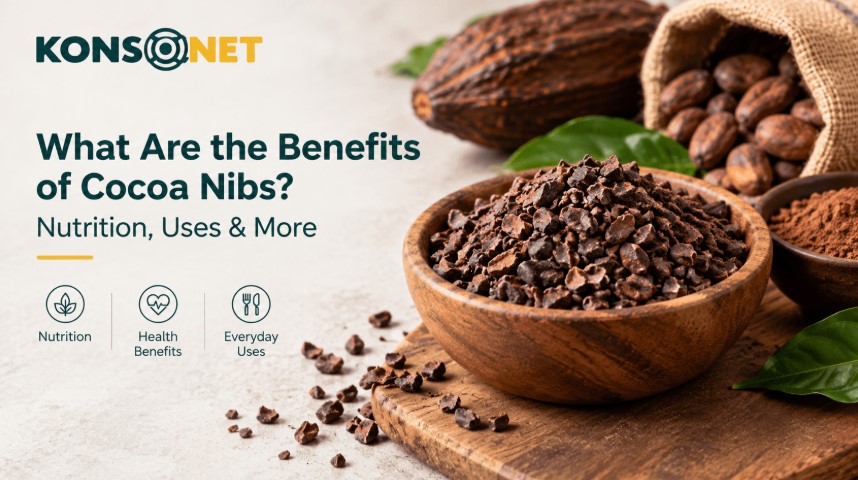
Cocoa nibs are small pieces of crushed cocoa beans that deliver an intense chocolate flavour without the added sugar commonly found in chocolate bars. They contain dietary fibre, minerals, naturally occurring fats and plant compounds called flavanols, making them a useful ingredient in a balanced diet.
The main benefits of cocoa nibs include contributing to fibre intake, supplying minerals such as magnesium and iron, providing antioxidant compounds and adding a rich chocolate taste to everyday foods. However, their nutritional value depends on how the beans are processed, and research on cocoa flavanols should not be interpreted as proof that cocoa nibs prevent or treat specific diseases.
From breakfast bowls and baked goods to chocolate manufacturing and plant-based recipes, cocoa nibs offer versatility for both home kitchens and professional food applications. Understanding their nutritional properties, uses and limitations can help consumers and food businesses make informed choices.
What Are Cocoa Nibs?
Cocoa nibs are small pieces of the edible inner part of cocoa beans, which grow inside the pods of the cacao tree (Theobroma cacao). They are produced by cleaning and processing cocoa beans, removing the outer shells and breaking the remaining kernels into smaller pieces.
Unlike conventional chocolate products, plain cocoa nibs are generally not made with added sugar, milk or additional flavourings. Their natural taste is intense, slightly bitter, nutty and distinctly chocolate-like.
The production process usually involves several stages:
- Fermentation: Freshly harvested cocoa beans undergo fermentation, which helps develop their characteristic flavour.
- Drying: Moisture is reduced to prepare the beans for storage and further processing.
- Roasting or other heat treatment: Depending on the product, heat may be applied to develop flavour and reduce microbial risks.
- Cracking and winnowing: The beans are broken apart, and the outer shells are separated from the edible kernels.
- Breaking into nibs: The kernels are reduced to small pieces suitable for food applications.
The International Cocoa Organization provides an overview of these stages in its guide to cocoa processing.
Cocoa nibs should not be confused with cocoa powder or cocoa butter. Cocoa powder is produced by pressing cocoa liquor to remove part of its fat and processing the remaining cocoa solids. Cocoa butter is the fat extracted during this process. Cocoa nibs retain much of the fat naturally present in the cocoa kernel.
What Are the Nutritional Benefits of Cocoa Nibs?
The nutritional benefits of cocoa nibs come from their combination of dietary fibre, naturally occurring fats, minerals and plant compounds. They are not a complete source of nutrition, but they can contribute useful nutrients when included in a varied diet.
1. They Provide Dietary Fibre
Dietary fibre is an important component of a healthy eating pattern. It helps support normal digestive function and can contribute to regular bowel movements.
Cocoa nibs contain naturally occurring fibre, which makes them a convenient addition to meals such as porridge, yoghurt, fruit bowls and whole-grain cereal.
For example, sprinkling cocoa nibs over oatmeal adds texture and fibre while providing a more intense chocolate flavour than many sweetened toppings.
The amount of fibre you obtain depends on the quantity eaten and the nutritional composition of the particular product. Check its nutrition label for the most reliable information.
2. They Supply Magnesium
Magnesium is an essential mineral involved in normal muscle and nerve function, energy metabolism and the maintenance of healthy bones.
Cocoa solids are recognised as a source of magnesium. Adding cocoa nibs to a varied diet can therefore help contribute to overall magnesium intake.
However, cocoa nibs should complement other magnesium-containing foods rather than replace them. Nuts, seeds, legumes, whole grains and leafy green vegetables also contribute to this mineral intake.
3. They Contain Iron and Copper
Iron helps the body produce haemoglobin, a protein in red blood cells responsible for transporting oxygen. Copper supports several important functions, including normal iron metabolism and connective tissue maintenance.
Cocoa nibs naturally contain both minerals, although their concentrations vary with the beans and processing methods.
Plant-derived iron is non-haem iron, which is generally absorbed less efficiently than the haem iron found in animal foods. Eating plant-based iron sources alongside vitamin C-rich foods, such as berries or citrus fruit, can improve non-haem iron absorption.
Cocoa nibs can contribute to mineral intake, but they should not be relied upon as a treatment for iron deficiency or another nutritional deficiency.
4. They Contain Naturally Occurring Fats
Cocoa nibs retain cocoa’s naturally occurring fat, which is made up of several fatty acids. This fat contributes to their flavour, texture and energy content.
Dietary fat is necessary for normal bodily functions, including the absorption of fat-soluble vitamins. However, cocoa nibs are relatively energy-dense because of their fat content.
Their nutritional contribution therefore depends on how they fit into the overall meal. Using them as one ingredient in a balanced breakfast or snack is more useful than assuming that a food is automatically beneficial simply because it is minimally processed.
5. They Provide Plant-Based Antioxidant Compounds
Cocoa contains polyphenols, including flavanols, which are plant compounds studied for their antioxidant activity and possible effects on several aspects of human health.
Research has investigated cocoa flavanols in relation to blood vessel function, blood pressure and other cardiovascular markers. However, results vary across studies, and the health effects depend on factors such as the amount consumed, the characteristics of the cocoa product and its processing.
A review published in Food and Chemical Toxicology discusses the potential effects and limitations of the evidence in its analysis of cocoa flavanols and human health.
One important consideration is that the total flavanol content of cocoa nibs cannot be determined simply by looking at their colour or assuming that an unprocessed product always contains more. Fermentation, roasting and other processing conditions can influence the final composition.
Just Read: Cocoa nibs health benefits uses and where to buy in bulk.
What Are the Potential Health Benefits of Cocoa Nibs?
Beyond their nutrient content, cocoa nibs are of interest because cocoa-derived plant compounds have been studied for their possible physiological effects. It is important to distinguish established nutritional functions from benefits that are still being researched.
Supporting Normal Cardiovascular Function
Cocoa flavanols have been studied for their potential influence on blood vessel function. Some human trials suggest that particular flavanol-rich cocoa products may improve certain measures of vascular function.
However, evidence from studies of concentrated extracts, specially formulated cocoa products or flavanol-rich chocolate cannot automatically be applied to ordinary cocoa nibs. Their flavanol content varies, and eating nibs alone does not guarantee a particular health outcome.
In the European Union, an authorised health claim concerning cocoa flavanols and normal blood flow has specific conditions of use. It applies to qualifying products that provide the specified amount of cocoa flavanols, not automatically to every food containing cocoa. See the relevant EU regulation on cocoa flavanols.
Contributing to a Balanced Diet
Cocoa nibs can make nutrient-containing meals more appealing by adding flavour and texture to foods such as fruit, oats and yoghurt.
Their usefulness is practical as well as nutritional. An ingredient that adds variety to meals may help people enjoy a broader range of foods without relying on heavily sweetened toppings.
Nevertheless, nibs are best understood as one component of a balanced dietary pattern. They do not replace the benefits of eating a variety of vegetables, fruit, whole grains, legumes, nuts and other nutrient-rich foods.
Offering an Alternative to Sweetened Chocolate Toppings
Plain cocoa nibs usually have no added sugar, although flavoured or coated varieties may contain added ingredients.
This makes plain nibs a useful option for people who want a chocolate flavour without adding the sugar found in many chocolate chips, confectionery products or dessert toppings.
Their bitterness is an important consideration. Some people enjoy the contrast between cocoa nibs and naturally sweet ingredients such as bananas, berries or dates, while others may prefer recipes that combine nibs with a small amount of sweetener.
Cocoa nibs are not sugar-free in every possible formulation, so the ingredient list should be checked when purchasing packaged products.
How Can You Use Cocoa Nibs in Everyday Foods?
Cocoa nibs are versatile because they provide chocolate flavour without melting into a smooth mixture or becoming sweet on their own. Their crunchy texture works particularly well in foods where a contrast in texture is desirable.
Breakfast Foods
Add cocoa nibs to porridge, overnight oats, muesli or yoghurt bowls. They pair well with bananas, strawberries, blueberries, nuts and seeds.
For an easy breakfast, combine oats, plain yoghurt, sliced banana and a small sprinkle of cocoa nibs. This creates a mixture of textures and flavours without requiring a complicated recipe.
Smoothies and Smoothie Bowls
Cocoa nibs can be blended into smoothies or sprinkled over smoothie bowls. When blended, they may leave small pieces rather than producing the completely smooth texture of cocoa powder.
For a chocolate-flavoured smoothie, combine a banana, milk or a suitable plant-based alternative, plain yoghurt and a little cocoa powder. Add cocoa nibs on top if you prefer extra crunch.
Baking and Desserts
Cocoa nibs can be incorporated into cookies, brownies, muffins, granola bars and homemade desserts.
Unlike conventional chocolate chips, they do not melt into sweet chocolate pockets. Instead, they retain their characteristic roasted flavour and can provide a slight crunch.
For the best results, start by replacing only part of the chocolate chips or other inclusions in a familiar recipe. This makes it easier to adjust the sweetness and texture without significantly changing the recipe.
Snacks and Trail Mixes
Plain cocoa nibs work well in homemade snack mixes containing nuts, seeds, dried fruit or whole-grain cereal.
The combination of bitter cocoa, sweet fruit and crunchy nuts offers a variety of flavours. Since both nibs and nuts can be energy-dense, the quantity used should suit the intended snack and overall meal.
Savoury and Plant-Based Recipes
Cocoa nibs are not limited to sweet foods. Their roasted, slightly bitter notes may complement certain savoury recipes, including spice blends, sauces and dishes featuring roasted vegetables.
They can also be used as a finishing ingredient in some plant-based recipes where a subtle cocoa flavour and crunchy texture are desirable. Start with a small amount because the bitterness can become pronounced when combined with delicate ingredients.
How Much Cocoa Nibs Should You Eat?
There is no universally established daily serving of cocoa nibs that guarantees a health benefit. The appropriate amount depends on individual dietary needs, food preferences and how the ingredient is used.
For everyday cooking, try starting with approximately one tablespoon and adjust according to taste and the recipe. This is a practical kitchen suggestion, not a medically established dose.
A few points can help you decide how to use them:
- Consider the recipe: A small sprinkle may be enough for porridge, yoghurt or a smoothie bowl.
- Read the nutrition label: Energy, fibre, mineral and sugar values can vary between products.
- Account for natural stimulants: Cocoa nibs contain theobromine and smaller amounts of caffeine. People who are sensitive to stimulants may prefer smaller quantities or avoid consuming them close to bedtime.
- Choose a suitable product: Plain nibs are a straightforward choice when you want cocoa flavour without additional sweeteners.
There is no need to consume large quantities to include cocoa nibs in a varied diet. Their main appeal is their flavour, versatility and contribution of nutrients.
Just Read: How to use cocoa nibs in daily diet easy ways and health benefits.
How to Choose Good-Quality Cocoa Nibs
Choosing an appropriate product involves more than looking at its colour or packaging. Processing, ingredient information, storage and the intended application all matter.
Check the Ingredients
For plain cocoa nibs, the ingredient list should generally identify cocoa nibs or cocoa beans, depending on how the product is labelled.
Products coated with sugar, flavoured with additional ingredients or combined with other foods may have a different nutritional profile. Check the label if you need to avoid particular ingredients.
Understand the Processing Method
Some cocoa nibs are roasted, while other products are marketed as raw or minimally processed. These descriptions can affect flavour, but they do not, by themselves, prove superior nutritional quality or safety.
Roasting and other processing methods can influence the flavour and chemical composition of cocoa. Consider both the production information and the intended use rather than selecting a product on the basis of a single label claim.
Consider Freshness and Storage
Cocoa nibs should have a characteristic cocoa aroma without an unpleasant or rancid smell. Packaging should be intact, and the product should be stored according to the manufacturer’s instructions.
Because cocoa nibs retain natural fat, exposure to heat, light and air can affect their quality over time. An airtight container in a cool, dry place is a practical option for products that do not require refrigeration.
Look at Sourcing and Quality Information
For regular household use or food manufacturing, transparent product specifications and clear ingredient information can make purchasing decisions easier.
Businesses purchasing cocoa ingredients may also need to consider consistency, processing requirements, batch documentation, traceability and applicable food safety requirements.
For products intended for the European market, applicable EU food safety rules and ingredient requirements should be considered alongside the supplier’s specifications.
Are There Any Downsides to Eating Cocoa Nibs?
Cocoa nibs can be part of a varied diet, but several considerations are worth keeping in mind.
Their flavour is naturally bitter. Unlike sweetened chocolate, plain nibs contain little or no added sugar. Pairing them with fruit or including them in recipes can make their flavour more appealing.
They contain natural stimulants. Theobromine and caffeine occur naturally in cocoa. People who experience sensitivity to these compounds may notice unwanted effects, particularly when consuming larger amounts.
Their nutritional composition varies. Cocoa variety, growing conditions, fermentation, roasting and other processing steps influence the final product. Do not assume that all cocoa nibs have the same nutrient or flavanol content.
Cocoa products can contain environmental contaminants. Cadmium can enter cocoa through the environment and varies with growing conditions. Purchasing from reputable suppliers that follow appropriate quality and food safety controls is a sensible precaution. This does not mean that cocoa nibs are inherently unsafe, but it reinforces the importance of responsible sourcing and quality management.
Allergies and dietary requirements still matter. Cocoa nibs may be packaged in facilities that also handle allergens. Check the product label if you have an allergy or need to avoid cross-contact with specific ingredients.
Cocoa nibs should be treated as a food ingredient, not as a medical treatment or a substitute for professional dietary advice when a medical condition requires specific nutritional management.
Conclusion
Cocoa nibs offer an intense chocolate flavour, a crunchy texture and a combination of dietary fibre, naturally occurring fats, minerals and plant compounds. Their potential advantages include contributing to overall nutrient intake and providing cocoa flavanols that researchers continue to investigate.
Their practical value lies in their versatility. From breakfast bowls and homemade snacks to baked goods and food manufacturing, cocoa nibs can be used in many ways without the sweetness of conventional chocolate chips.
For the best experience, choose a product with clear ingredient information, follow appropriate storage instructions and use cocoa nibs in quantities that suit your recipes and preferences. Their benefits are most meaningful when they form part of a varied, balanced diet.
Frequently Asked Questions
1. What are the main benefits of cocoa nibs?
Cocoa nibs provide dietary fibre, minerals such as magnesium and iron, naturally occurring fats and plant compounds including flavanols. They also offer an intense chocolate flavour without the added sugar typically found in many sweetened chocolate toppings.
2. Are cocoa nibs healthier than chocolate?
Plain cocoa nibs often contain less added sugar than conventional chocolate products. However, the nutritional comparison depends on the specific chocolate, its cocoa content, its ingredients and the quantity consumed. Cocoa nibs are not automatically superior in every nutritional respect.
3. Do cocoa nibs contain antioxidants?
Yes. Cocoa nibs contain polyphenols, including flavanols, which are studied for their antioxidant activity and potential effects on human health. The amount retained depends on the cocoa beans and processing methods, so it varies between products.
4. Can cocoa nibs be eaten every day?
Cocoa nibs can be included in everyday meals as part of a varied diet. The appropriate quantity depends on individual preferences and dietary needs. Their natural fat content and stimulant compounds are worth considering when deciding how much to use.
5. Do cocoa nibs contain caffeine?
Yes. Cocoa nibs contain some caffeine and also contain theobromine, another naturally occurring stimulant found in cocoa. The amounts vary by product, so people who are sensitive to stimulants should consider their overall intake.
6. Can cocoa nibs help support heart health?
Research on cocoa flavanols suggests possible benefits for certain measures of blood vessel function. However, the evidence does not establish that ordinary cocoa nibs prevent heart disease, and their flavanol content varies. They should be consumed as food, not as a cardiovascular treatment.
7. How should cocoa nibs be stored?
Store cocoa nibs in an airtight container in a cool, dry place, away from direct sunlight and strong odours. Follow the manufacturer’s instructions and use the product within its stated shelf life to help preserve flavour and quality.
8. Can cocoa nibs be used in food manufacturing?
Yes. Cocoa nibs can be used in suitable chocolate products, bakery items, breakfast cereals, snack mixes and other food formulations. Manufacturers should assess flavour, texture, processing compatibility, product specifications and food safety requirements before selecting an ingredient.
9. What is the difference between cocoa nibs and cocoa powder?
Cocoa nibs are pieces of the cocoa bean’s edible kernel and retain much of its natural fat. Cocoa powder is made by pressing cocoa liquor to remove part of the fat and processing the remaining cocoa solids into powder. They differ in texture, fat content, flavour and how they perform in recipes.
Explore Cocoa Ingredients with Konsonetas
Understanding the properties of cocoa ingredients can help home cooks, bakers and food manufacturers select suitable products for their needs. To learn more about cocoa-based ingredients and related product options, explore the information available on the Konsonetas website.