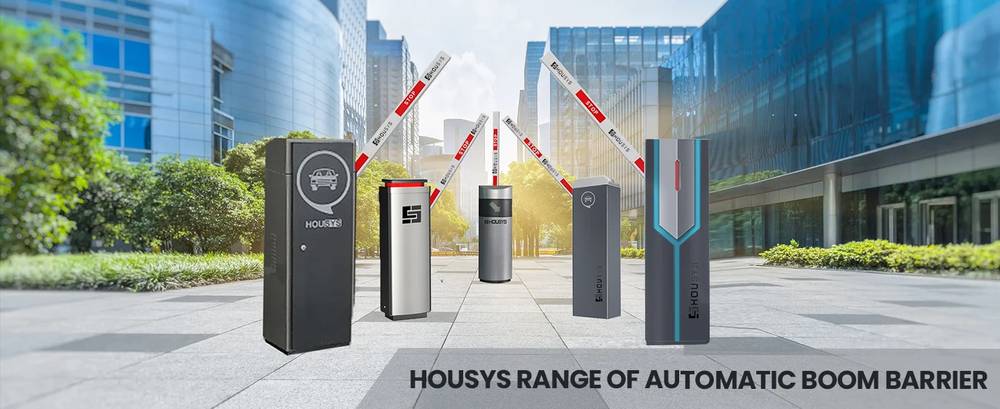
Managing vehicle entry and exit is an important part of maintaining security and operational efficiency in residential communities, commercial buildings, industrial facilities and parking areas. As vehicle movement increases, traditional manual entry systems may become difficult to manage, particularly during peak hours. An automatic boom barrier offers a practical solution by controlling vehicle access through a motorised arm and an appropriate access-control mechanism.
Businesses looking for a suitable boom barrier should consider more than the initial purchase cost. Factors such as traffic volume, opening speed, boom arm length, safety features, durability and compatibility with existing security systems can influence long-term performance.
Choosing the right equipment from an experienced Boom Barrier Manufacturer or supplier helps organisations identify a solution that fits their entrance layout and operational requirements.
What Is an Automatic Boom Barrier?

An automatic boom barrier Manufacturer is a vehicle access-control system that uses a motorised horizontal arm to regulate entry and exit. The arm rises to allow an authorised vehicle to pass and lowers when the passage is clear and it is safe to close.
Depending on the installation, the barrier can operate through remote controls, push buttons, RFID cards or tags, access-control systems, ticketing equipment and automatic number plate recognition (ANPR) systems.
These systems are commonly used at housing societies, office entrances, factories, warehouses, hospitals, shopping centres and paid parking facilities.
Unlike a conventional manual gate, an automatic barrier can support faster and more consistent vehicle processing when properly selected, installed and maintained.
Key Factors to Consider Before Buying a Boom Barrier
Selecting a suitable barrier requires an understanding of the location, expected traffic and level of automation required.
1. Assess Traffic Volume and Opening Speed
The first step is to estimate how many vehicles will pass through the entrance during normal and peak operating hours.
A residential complex with a limited number of vehicles may require a different system from a shopping centre or industrial facility with frequent vehicle movement. A barrier that opens too slowly can contribute to queues, while an unnecessarily high-speed model may increase the investment without providing meaningful benefits.
Consider the expected traffic volume, opening and closing time, and the manufacturer’s recommended operating cycle before making a decision.
2. Select the Correct Boom Arm Length
The required boom arm length depends on the clear width of the vehicle lane. The entrance should be measured before selecting a model.
A standard straight arm may suit a conventional driveway, whereas a folding arm may be appropriate where ceiling clearance is limited, such as certain basement parking entrances.
For wider entrances, the installation layout should be evaluated by a qualified supplier to determine whether a longer arm or a two-barrier arrangement is more suitable.
3. Check Safety Features
Safety should be a priority when installing an automatic boom barrier in an area shared by vehicles and pedestrians.
Useful safety provisions may include:
- Vehicle detection loops or suitable presence sensors.
- Infrared photocells to detect obstructions.
- Automatic stop or reverse functionality, where supported.
- Warning lights or illuminated boom arms for visibility.
- Manual release provisions for emergencies or power failures.
The safety devices should be compatible with the barrier and correctly configured during installation. A boom barrier controls vehicle access but does not replace a separate pedestrian gate or a physical security gate where either is required.
4. Evaluate Access-Control Integration
Modern parking facilities often need more than a barrier arm. They may also require a system for identifying authorised vehicles and managing visitor access.
Depending on the project, an automatic boom barrier can be integrated with RFID readers, access-control panels, ANPR cameras, parking management software and ticketing systems.
For example, a residential society can use RFID tags to identify registered vehicles, while a commercial parking facility may use ticketing or number plate recognition to manage entry records.
Before purchasing, confirm which integrations are supported by the selected model and whether additional controllers, software or installation work will be required.
5. Consider Durability and Maintenance
A boom barrier installed outdoors may be exposed to dust, rain, heat and frequent operating cycles. These conditions make equipment quality and maintenance support important considerations.
Ask the supplier about the mechanism, motor specifications, operating-cycle rating, warranty, availability of replacement parts and recommended maintenance schedule.
Routine inspections can help identify wear, loose fittings, sensor problems and changes in operating performance before they lead to unexpected downtime.
Understanding Boom Barrier Price in India
The Boom Barrier Price depends on the specifications of the equipment and the requirements of the installation. There is no single price that applies to every site.
When comparing the Boom Barrier Price in India, buyers should evaluate the following factors:
- Boom arm length: Wider entrances may require different equipment or a specialised configuration.
- Operating speed: High-traffic sites may need faster opening and closing performance.
- Usage frequency: Commercial and industrial installations may require equipment designed for more frequent operation.
- Automation features: RFID, ANPR, ticketing and access-control integration can affect the overall project cost.
- Installation requirements: Civil work, electrical connections, safety devices and commissioning may add to the total investment.
- After-sales support: Warranty coverage, service availability and spare parts can influence long-term ownership costs.
The Automatic Boom Barrier Price should therefore be assessed against the complete application rather than the equipment cost alone. Similarly, anyone comparing the Automatic boom barrier Gate price should request a quotation based on lane width, expected traffic, automation requirements and installation scope.
For an accurate comparison, ask suppliers to provide a clear breakdown of equipment, accessories, installation, warranty and applicable taxes.
How to Choose a Reliable Boom Barrier Supplier in India
Selecting the right supplier is an important part of planning a dependable vehicle access-control installation.
A professional Boom Barrier Supplier should understand the application, recommend appropriate equipment and explain the installation requirements. Buyers should assess technical suitability alongside price.
When evaluating a Boom Barrier Supplier in India, consider these points:
Product suitability: Does the supplier offer a model suitable for the entrance width, traffic volume and operating environment?
Technical guidance: Can the supplier explain the available arm configurations, operating speed and supported access-control options?
Installation support: Is installation, testing and commissioning included or available?
Warranty and maintenance: Are warranty terms, service arrangements and replacement parts clearly explained?
System compatibility: Can the equipment work with the access-control or parking management system already in use?
Organisations searching for a Boom Barrier Manufacturer in India should also check product documentation, available specifications and the manufacturer’s ability to support the intended application.
An Automatic Boom Barrier Manufacturer with suitable technical capabilities can help buyers understand the differences between models. When comparing an Automatic Boom Barrier Manufacturer in India, focus on product suitability, documentation, quality assurance and support rather than relying on marketing claims alone.
Likewise, an Automatic Boom Barrier Supplier in India should be able to clarify the scope of supply and any additional components required for the project.
The right Automatic boom barrier vendor will help match the equipment to the site’s requirements instead of recommending the same configuration for every installation.
Common Applications of Automatic Boom Barriers
Residential Societies and Gated Communities
Housing societies use boom barriers to manage vehicle entry, distinguish registered residents from visitors and support controlled parking access. RFID-based access can make entry more convenient for authorised vehicles.
Corporate Offices and IT Parks
Office campuses often need to manage employee vehicles, visitor parking and contractor access. A barrier integrated with an access-control system can support a more organised entry process.
Industrial Facilities and Warehouses
Factories and warehouses may use Boom Barrier Manufacturer at vehicle checkpoints to regulate access for employees, delivery vehicles and authorised transport. Equipment selection should account for vehicle frequency and site conditions.
Hospitals and Healthcare Facilities
Hospitals may use automatic barriers to organise parking access for staff, patients and visitors. Emergency vehicle routes must be planned carefully so that access-control equipment does not obstruct emergency movement.
Shopping Centres and Commercial Parking
Shopping centres and paid parking facilities may combine boom barriers with ticketing systems, RFID or number plate recognition. The appropriate configuration depends on parking capacity, traffic flow and payment processes.
Installation and Maintenance Best Practices
Even a suitable barrier may not perform reliably if it is installed incorrectly or maintained poorly.
Before installation, verify the entrance dimensions, foundation requirements, power supply, cable routing and mounting position. Confirm that the boom arm has sufficient clearance and that vehicles can approach and pass through without difficulty.
During commissioning, test the control mechanism, access credentials, safety sensors and manual release. Where the barrier is connected to a larger parking or access-control system, verify that all components communicate correctly.
After installation, follow the manufacturer’s maintenance recommendations. Periodic checks of the arm, mounting hardware, motor mechanism, sensors and control unit can help maintain dependable operation.
A planned maintenance schedule is particularly important at entrances that experience frequent daily vehicle movement.
Why Choose the Right Boom Barrier Solution for Your Facility?
A suitable boom barrier can help improve vehicle access management, reduce reliance on manual operation and support more organised parking operations. However, the best solution depends on the site layout, traffic requirements, safety provisions and desired level of automation.
Before making a purchase, compare product specifications, request a detailed quotation and confirm the availability of installation and after-sales support.
Businesses exploring different models can review boom barrier solutions from Houston Systems to learn more about the available options and identify equipment relevant to their vehicle access-control requirements.
Working with a supplier that understands the application can help simplify equipment selection and support a more effective installation.
Frequently Asked Questions (FAQs)
1. What is an automatic boom barrier used for?
An automatic boom barrier controls vehicle entry and exit at locations such as residential societies, office buildings, factories, hospitals, warehouses and parking facilities. It can be operated through remote controls or integrated with suitable access-control technologies.
2. What factors affect the boom barrier price in India?
The price depends on boom arm length, operating speed, duty cycle, automation features, safety accessories, installation requirements and after-sales support. A detailed quotation is the best way to compare complete project costs.
3. How do I choose a boom barrier manufacturer in India?
Evaluate the manufacturer’s product specifications, technical documentation, available configurations, warranty terms and service support. Select equipment that matches the entrance dimensions and expected traffic volume.
4. Can an automatic boom barrier work with RFID or ANPR?
Yes. Compatible systems can integrate with RFID readers or ANPR cameras to identify authorised vehicles. Integration requirements depend on the barrier controller and the other equipment used in the installation.
5. Are automatic boom barriers suitable for residential societies?
Yes. They are commonly used to manage resident and visitor vehicles at gated communities. The appropriate setup depends on traffic volume, entry layout, security procedures and access-control requirements.
6. How often should a boom barrier be maintained?
Maintenance frequency depends on the manufacturer’s recommendations, environmental conditions and the number of operating cycles. Regular inspection and functional testing help identify wear and safety issues early.
Conclusion
Automatic boom barriers are a practical component of modern vehicle access management. Choosing the right system requires careful consideration of traffic volume, arm length, operating speed, safety features, integration options and long-term maintenance.
For organisations comparing a Boom Barrier Manufacturer, Boom Barrier Supplier or Automatic Boom Barrier Supplier in India, the most effective approach is to evaluate the complete solution rather than choosing equipment on price alone.
A well-planned installation can support smoother vehicle movement, more organised access control and reliable day-to-day operation across residential, commercial and industrial environments.