Actinic Keratosis Before and After: See how skin may change during treatment and recovery.
What Changes Can You Expect?
Actinic Keratosis Before and After treatment can look remarkably different, depending on the treatment method, lesion thickness, skin type, and degree of sun damage. Some rough patches disappear within days, while others take several weeks to heal. Knowing what to expect helps you recognise normal recovery, care for your skin, and identify changes that need medical attention.
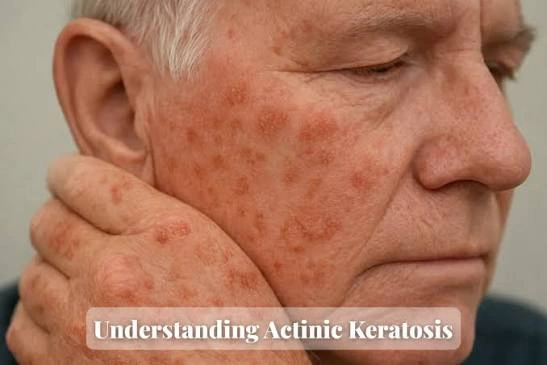
Actinic keratosis (AK) is a common skin condition caused by years of ultraviolet (UV) exposure. It often appears as a rough, scaly, dry patch on sun-exposed areas, including the face, scalp, ears, hands, and forearms. Although individual lesions may seem harmless, some can develop into squamous cell skin cancer.
Comparing treatment results involves more than checking whether a visible patch has disappeared. Healthy healing, reduced scaling, fewer suspicious lesions, and ongoing skin protection all matter. This guide explains how different treatments affect the skin, what recovery looks like, and how to maintain results safely.
What Actinic Keratosis Looks Like Before Treatment
Before treatment, actinic keratosis may appear as a small, rough patch that feels like sandpaper. Its colour can range from pink and red to brown or skin-coloured. Some lesions are easier to feel than see, particularly on the scalp or forehead.
Common signs include:
- Persistent roughness or flaking.
- A flat or slightly raised patch.
- Redness, tenderness, or mild itching.
- A thicker, crusted surface.
- Multiple lesions across sun-exposed skin.
The appearance varies from person to person. A single lesion may be barely noticeable, whereas several patches can create uneven texture across the forehead, cheeks, or hands.
A dermatologist examines suspicious areas and may recommend a skin biopsy when the diagnosis is uncertain or a lesion looks concerning. A thick, rapidly growing, painful, bleeding, or ulcerated patch needs prompt assessment rather than cosmetic treatment alone.
What Changes After Treatment?
After successful treatment, the treated area may become smoother as damaged cells are removed or replaced during healing. However, improvement does not always happen immediately. Redness, crusting, swelling, peeling, and temporary changes in pigmentation can occur before the skin settles.
The final appearance depends on the treatment used and the depth of inflammation. Some people develop temporary pinkness, while others experience lighter or darker areas. Scarring is possible, although its likelihood varies by procedure and individual healing characteristics.
Remember that a clearer-looking surface does not automatically prove that every abnormal cell has disappeared. Follow-up examinations remain important, particularly if you have numerous lesions or extensive sun damage.
Comparing Results After Cryotherapy
Cryotherapy uses liquid nitrogen to freeze abnormal skin cells. It is commonly used for individual actinic keratosis lesions and is usually performed during a clinic appointment.
Before and after freezing
Before cryotherapy, a lesion may feel rough, raised, or crusted. Immediately afterwards, the treated area can become red, swollen, or blistered. A crust may form as the skin repairs itself.
Over the following days, the crust usually dries and separates naturally. Many treated areas heal within a few weeks, although healing time varies with lesion size, location, and treatment intensity.
When assessing Actinic Keratosis Before and After cryotherapy, look for gradual improvement rather than instant perfection. The patch may flatten, become less scaly, and eventually blend more closely with surrounding skin.
Possible temporary effects include:
- Mild stinging or tenderness.
- Blister formation.
- Crusting and peeling.
- Temporary lighter or darker skin.
- Occasional scarring.
Do not pick blisters or remove crusts prematurely. Contact your clinician if redness spreads, pain increases, pus develops, or healing appears unusually slow.
Comparing Results After Topical Prescription Treatments
Prescription creams and gels treat actinic keratosis in different ways. Some encourage the immune system to attack abnormal cells, while others interfere with cellular growth. These treatments can be useful when multiple lesions affect a broader area.
What happens during treatment?
Medicines such as fluorouracil, imiquimod, and tirbanibulin may cause redness, burning, scaling, inflammation, or crusting. The intensity depends on the medicine, application schedule, and individual skin response.
These reactions can look worse before the skin improves. However, severe pain, extensive swelling, or symptoms that concern you should be discussed with your prescriber.
Comparing Actinic Keratosis Before and After topical therapy requires patience because the treatment course and recovery period differ between medicines. Some patients see temporary inflammation followed by smoother skin, while others need additional assessment or treatment.
Follow the prescribed instructions carefully. Do not increase application frequency or extend the course independently in an attempt to accelerate results.
How long does recovery take?
Recovery depends on the specific medicine. Treatment-related inflammation may continue after the final application, and visible improvement can take several weeks. Your dermatologist can explain the expected reaction and when to arrange a review.
Use only recommended moisturisers and cleansers during recovery. Avoid introducing exfoliating acids, retinoids, or irritating skincare products without professional advice.
Comparing Results After Photodynamic Therapy
Photodynamic therapy (PDT) combines a light-sensitive medication with a specific light source to destroy abnormal cells. It may be recommended when several lesions occur within a larger sun-damaged area.
Before treatment, the skin may show widespread roughness, redness, and multiple scaly patches. During recovery, treated areas can become red, tender, swollen, and crusted.
Light exposure may cause discomfort during the procedure. Afterwards, some people experience peeling and sensitivity that gradually improve over several days or longer.
The comparison of Actinic Keratosis Before and After PDT should consider both the treated lesions and the surrounding field of damaged skin. A dermatologist can determine whether the response is satisfactory and whether another session is necessary.
Caring for skin after light treatment
Your clinician may advise gentle cleansing, bland moisturisers, and temporary avoidance of direct sunlight. Follow any specific light-avoidance instructions provided for your photosensitising medication.
Do not assume that every red area represents treatment failure. Likewise, persistent thickening or a lesion that continues to grow deserves reassessment.
Comparing Results After Curettage and Other Procedures
Curettage involves scraping away abnormal tissue using a specialised instrument. It may be combined with another procedure when the clinician considers this appropriate. Selected lesions may also be treated with other surgical techniques.
Immediately afterwards, the treated area may look like a shallow wound. A dressing may be needed, and a crust can develop during healing. The final appearance depends on the wound’s depth, location, and the person’s healing response.
Compared with treatments that affect a broader skin field, curettage focuses on a particular lesion. It may therefore be less suitable when numerous scattered patches require attention.
Actinic Keratosis Before and After a procedure should be evaluated for wound closure, persistent inflammation, unusual scarring, and recurrence. Follow wound-care instructions, keep the area clean as directed, and avoid removing the healing crust.
If bleeding does not stop with steady pressure, or the wound develops increasing pain, spreading redness, or discharge, seek medical advice.
Factors That Influence Treatment Results
Two people receiving the same treatment may experience different outcomes. Several factors influence how quickly lesions respond and how the surrounding skin heals.
Lesion thickness and location
Thicker lesions may respond differently from thin, flat patches. Lesions on the scalp, nose, ears, or hands may also heal differently because skin thickness, movement, and sun exposure vary across these areas.
A dermatologist may recommend a biopsy or another approach for unusually thick or persistent lesions.
Skin type and healing response
Natural pigmentation, previous scarring, sensitivity, and other skin conditions can affect the appearance of healing. Some people develop temporary darkening or lightening after inflammation.
Avoid comparing your recovery too closely with another person’s photographs. Your clinician can assess whether your progress matches the expected response for your treatment.
Extent of sun damage
When several lesions occur together, treating visible patches may not address all damaged skin cells in the surrounding area. This is one reason dermatologists sometimes recommend field-directed treatment rather than treating each spot separately.
A successful result includes an appropriate treatment response and a plan for monitoring future changes.
Supporting Skin Recovery with Everyday Care
Gentle skincare can support comfort while your skin heals. It cannot replace medical treatment, but it can reduce unnecessary irritation and help maintain the skin barrier.
Consider these practical steps:
- Wash gently with lukewarm water and a mild cleanser.
- Use a fragrance-free moisturiser if recommended.
- Avoid scrubbing, picking, or peeling treated areas.
- Pause irritating skincare products when advised.
- Follow wound-care instructions from your clinician.
- Attend scheduled follow-up appointments.
A suitable skincare routine should be simple. Avoid trying multiple new products at once, especially when the skin is inflamed.
Considering plant-based skincare options
People interested in a Natural Treatment for Actinic Keratosis should understand that no home remedy has been proven to reliably eliminate actinic keratosis or prevent its progression to skin cancer. Gentle moisturising care may ease dryness, but it does not remove abnormal cells.
Discuss herbal preparations, essential oils, and other topical products with your dermatologist before applying them to recently treated skin. Natural ingredients can still cause irritation or allergic reactions, particularly on an inflamed or healing surface.
Do not delay assessment or substitute an unproven remedy for a recommended treatment.
What About Diet and General Skin Health?
A balanced diet supports normal skin function, tissue repair, and overall health. Eating a variety of vegetables, fruits, whole grains, protein sources, and healthy fats helps provide nutrients needed by the body.
Adequate hydration also supports general wellbeing, although drinking extra water has not been shown to remove actinic keratosis lesions.
Some people explore Natural Remedies for Actinic Keratosis because they prefer a holistic approach to skin care. These approaches should complement, rather than replace, diagnosis, evidence-based treatment, and sun protection.
There is no reliable evidence that a particular food, tea, vitamin, or supplement can cure actinic keratosis. Ask a healthcare professional before taking high-dose supplements, especially if you use medicines or have an ongoing medical condition.
Choosing Products Carefully
When reviewing skincare products, examine the ingredients, intended use, and any warnings relevant to sensitive skin. Products marketed as natural are not automatically safe for every person.
Herbal Care Products may interest readers exploring wellness and plant-based skincare, but a product’s availability or herbal ingredients do not establish that it treats actinic keratosis. Check claims carefully and seek advice from a qualified healthcare professional before using a product on a treated lesion.
Avoid products that promise to remove precancerous lesions without medical assessment. A suspicious patch needs an accurate diagnosis, and an inappropriate topical preparation may irritate the skin or delay effective treatment.
Preventing New Lesions After Treatment
Treatment removes or controls existing lesions, but it does not reverse every effect of years of ultraviolet exposure. New actinic keratoses can appear even after an initially successful procedure.
Sun protection remains essential throughout the year, including on cloudy days and during outdoor activities.
Build a consistent protection routine
- Apply broad-spectrum sunscreen with SPF 30 or higher to exposed skin.
- Reapply sunscreen according to its label, especially after swimming or sweating.
- Wear a broad-brimmed hat and protective clothing.
- Seek shade when sunlight is strongest.
- Avoid tanning beds and deliberate tanning.
- Protect commonly missed areas, including the ears, lips, scalp, and backs of the hands.
Ask your dermatologist whether a lip sunscreen, scalp protection, or other specialised product would suit your needs.
Regular protection reduces further UV exposure, although it cannot guarantee that new lesions will never develop.
When Should You Seek Medical Advice?
Arrange a dermatology appointment if you notice a new rough patch that persists, a lesion that returns after treatment, or an area that becomes thicker or increasingly uncomfortable.
Seek prompt assessment for warning signs such as:
- Rapid growth or a hard, raised area.
- Persistent bleeding or an open sore.
- Increasing pain or tenderness.
- A lesion that fails to heal.
- Repeated crusting or ulceration.
These features do not automatically mean cancer, but they require appropriate evaluation. A clinician may recommend a biopsy to check for squamous cell carcinoma or another skin condition.
Do not wait for a scheduled cosmetic review if a treated area develops concerning changes.
Frequently Asked Questions
How soon can I see improvement?
Some lesions begin to improve within days, while others need several weeks. The timeline depends on the treatment, lesion characteristics, and individual healing response. Ask your clinician what is expected for your specific procedure.
Can actinic keratosis return after treatment?
Yes. A treated lesion may persist or recur, and new lesions can develop because previous sun damage remains. Continued skin examinations and sun protection are important.
Does smoother skin mean the condition is cured?
Not necessarily. A smoother surface is encouraging, but appearance alone cannot confirm that all abnormal cells have gone. Follow-up care helps determine whether further treatment is needed.
Can I use makeup during recovery?
This depends on the treatment and whether the skin is intact. Avoid applying makeup to open wounds, blisters, or irritated areas unless your clinician confirms it is safe.
Will treatment leave a scar?
Many treated areas heal without a prominent scar, but temporary colour changes and permanent scarring are possible. The risk varies with the procedure, lesion depth, and individual healing.
Final Thoughts
Comparing Actinic Keratosis Before and After skin treatment helps you understand the healing process, but results should be judged by more than photographs. Reduced roughness and improved texture can be encouraging, while persistent or changing lesions need professional review.
Cryotherapy, prescription medicines, photodynamic therapy, and selected procedures offer different benefits and recovery experiences. Your dermatologist can recommend an approach based on the number of lesions, their appearance, and your medical history.
Protect your skin from ultraviolet exposure, follow aftercare instructions, and keep regular appointments. With appropriate treatment and ongoing monitoring, you can manage actinic keratosis more confidently and respond promptly to changes that need attention.